

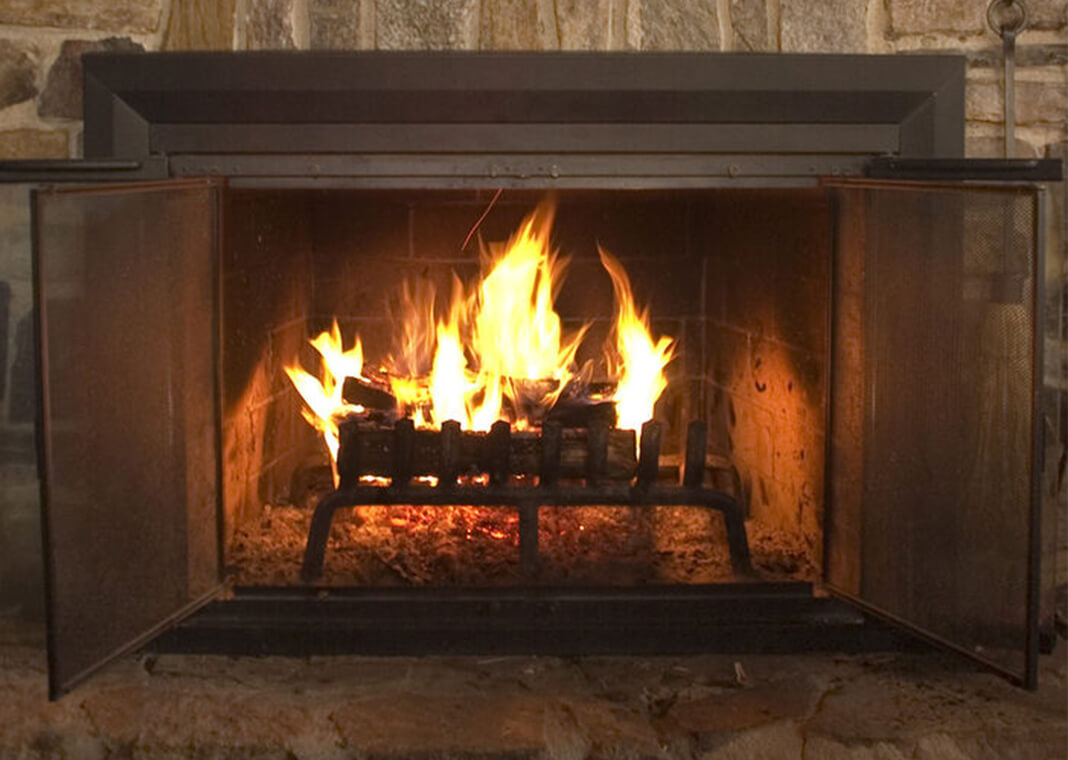

The trick to lighting a fire is to start by burning something small. In fact, you need lots of small things, preferably ones that catch fire easily: cardboard, sticks, broken branches, small bits of wood, and fire starters (storebought chunks of wood-like cylinders that catch and burn nicely). You need all these things, plus the requisite logs, to get your flames roaring, your fireplace hot, and your home toasty. And you need patience.
I’ve learned—in the several weeks since installing a woodburning fire insert in my fireplace—that while I possess many, if not all, of these things, I use them with a frugality that undermines the whole project. I collect just a few sticks from outside rather than carrying in a whole bundle. I try to make it work with just one fire starter instead of lobbing in three or four. I tear pieces of cardboard but use them sparingly, worried that I won’t have enough for the next time. And so, though I pile my logs high, they rarely catch or burn with the gusto I desire. I’m left falling to my knees again and again before the still-cold stove to encourage the reluctant flames, offering one more hunk of wood or a wee bit of additional cardboard as tribute to coax the warmth from the logs.
That is, that’s how I used to do it. Now, I start with a nice bed of cardboard—a whole box, perhaps—an abundance of twigs and branches, and three or more fire starters as the nest upon which my humble logs rest. It catches quickly and burns brightly, and I watch and wait with diligence as I feel the cozy embrace of the warming air wrap around my living room.
And I wonder, Is this how I approach my prayer life?
We all want that burning inferno of holy fire to envelop us in ecstatic delight as we come before the Lord. We want deep and abiding insight into the Spirit at work in our days. We want fortitude and wisdom and strength—physical and otherwise—as we go out into the world to do God’s good works.
And yet, I know that while I wish for those high and dancing flames, I offer only a few measly twigs to get the whole thing started. I sleep in rather than get up to pray. I get distracted by the empty coffee pot or the full dishwasher and lose sight of that stack of prayer books. I settle for five minutes of silence rather than 30.
This is fine. God delights in us whenever and wherever we go to seek the Spirit. God can work in a split second just as powerfully as in a full weekend retreat.
And yet, I find myself kneeling before those flickering flames, realizing that they only dance with such radiant and reliable beauty when I spend the time and the effort to build the nest properly. If I’m frugal and stingy with my time or resources, the flames dwindle and die.
Our God is greater than a fire, of course. Our God does all things, takes our humblest offerings, and turns them from dust into diamonds. But we would do well to spend time studying the flames and contemplating our fire-building practices.
That radical prayer of St. Ignatius, the Suscipe, begins with the words, “Take Lord, and receive all…” It is from that disposition of total gift and total availability—a disposition that holds nothing back but gives everything to this moment, this encounter, this divine enterprise—that the Spirit most eagerly works. Or, perhaps, it is from such a disposition that we most readily burn.
Because aren’t we the ones to catch fire with the Spirit of Pentecost? Don’t we desire God’s very self to envelop us and, through us, to warm the world? Aren’t we called to go and set the fire aflame?