

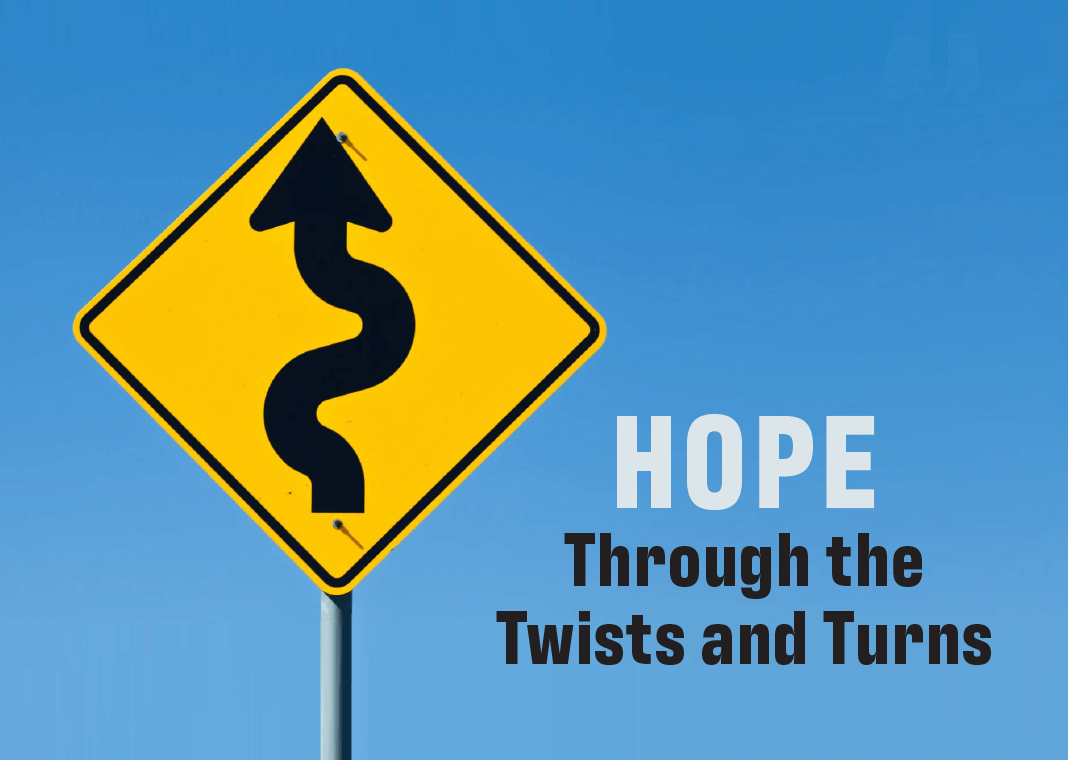

It’s no secret to anyone who knows me that I have absolutely no sense of direction. I can’t count how many times I have gotten lost in both familiar and unfamiliar places. Once, back before smartphones and driving-direction apps, I drove around the streets of Baton Rouge, LA, for five hours trying to find the mall.
In my defense, I was new to the area. I had started my assignment a few months earlier as a service teacher in a local Catholic school. While preparing our home and classrooms for the school year ahead, my housemates and I made quite a few trips to the local mall. From the passenger seat, the route seemed simple enough. It was just a couple twists and turns to get onto the highway, and then it was a straight shot there. After our third trip, I believed wholeheartedly that I could get there all by myself.
So, one Saturday morning I asked one of my housemates if I could borrow his car for a quick trip to the mall. He agreed, as long as I promised to return in a couple of hours. “Sure, no problem!” I said and started on my way. After three hours of twisting and turning down some unfamiliar roads, I stopped in a nearby parking lot to call my housemate. I took a deep breath as I dialed our home line, trying to calm the anxiety building in me. “So, this is clearly taking longer than I expected. And I have no idea where I am right now. Forget the mall, can you help me find my way home?”
Have you ever missed a turn or two on the way to your desired destination? Have you ever felt the anxiety of being completely, hopelessly lost?
I imagine none of us is a stranger to the feelings that come with being lost, whether physically, emotionally, spiritually, or mentally. It can be unsettling. It can be fear-inducing. It can make one lose hope of ever finding the way. Twenty years ago, driving the unfamiliar roads of Baton Rouge, I lacked many of the tools I have today that never fail to help me find hope and get me back on my way to my destination.
These days, I not only have a direction app on my phone, but I also have a few go-to Ignatian tools in my pocket to help, like:
- Finding God in Everything. Whenever I am lost, I feel alone and distant from everyone, especially God. But if I stop for a moment to take in the sights and sounds around me, I never fail to find signs of God’s presence.
- Imaginative Prayer. Whenever I am lost, I desperately desire calm and reassuring companionship. Using my imagination to place Christ in the passenger seat helps give me the assurance I need to know I am not navigating the unexpected twists and turns of this journey alone.
- The Graces of the Spiritual Exercises. Whenever I am lost, I instinctively berate myself for losing my way yet again. But then the graces I received from the Exercises, particularly in the First Week, remind me that Christ is always loving me as I am, where I am at any given moment. This helps me feel loved and supported on the way and helps me be gentler with myself.
- Companions on the Way. Whenever I am lost, it is easy to feel hopeless. But when I reach out and make the phone call to a good friend, a trusted mentor, or my spiritual director, that person’s companionship grounds me once again in hope.
These are just four of the Ignatian tools that I rely on to renew my hope and get me back on track to my destination. What are some of yours?