


 Shortly after his conversion, the ex-soldier and courtier Ignatius was riding down a dusty road in Spain in the company of a Moor. They were discussing religion, and, not surprisingly, they disagreed on a few points. The Moor angrily ended the discussion and rode off. As a parting shot, he made some insulting remarks about the Blessed Virgin Mary.
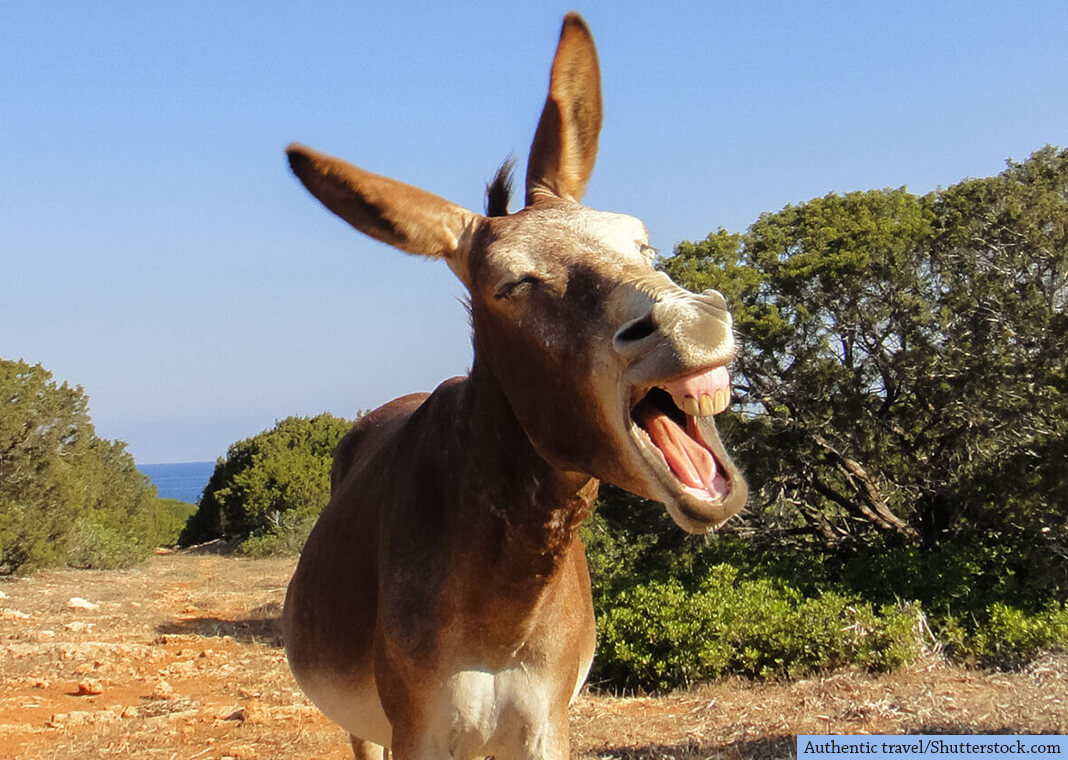
Ignatius was outraged. He thought it might be his knightly duty to defend the honor of Mary by killing the Moor, but he wasn’t sure that would be consistent with his new faith. He left the decision up to the donkey he was riding. They were approaching a crossroads. If the donkey took the road that the Moor took, Ignatius would follow and kill him. If the beast took the other road, he would let him go. The donkey took the other road.
What impresses me about this story is that Ignatius told it. He included it in his autobiography, which he dictated near the end of his life. At the time Ignatius was a much-honored churchman. He was regarded as a master of discernment and a font of spiritual wisdom. So Ignatius told a story about himself that made him look foolish and dangerously misguided. I like the humility of that decision. Ignatius is saying to me: beware of pride. You’re not as smart as you think you are.


I am reading The Little Flowers of St. Francis of Assisi, as part of my journey with Saint Francis this year. How humble was Saint Francis! In Chapter 16, entitled, Saint Francis Preaches to the Birds and Founds the Third Order, Saint Francis asked Brother Masseo to go to Sister Claire, and to ask that she and some of the holiest of her sisters would ask the Lord Jesus to show him clearly whether he should preach occasionally, or devote himself exclusively to prayer. He asked Brother Masseo to also go to Brother Silvester and ask him the same. Both Brother Silvester and St. Clare returned to Brother Masseo with the same answers. Brother Masseo returned to St. Francis and gave him their answers: that the will of Jesus is that St. Francis preach to the world, for he had not been called for himself alone, but for the salvation of others. And this led to the founding of the Third Order. My father often asked us as children, if we knew why there was a cross on the back of a donkey, and then he would tell us that it was because the donkey carried Jesus on his back, in the womb of Mother Mary to be born in Bethlehem. And near the end of his life on earth, another donkey carried Jesus on his back, to Jerusalem for his crucifixion and death on the Cross. And so my thought for St. Ignatius is that this animal used by the Lord in these ways of his life, would have the answer for the life of St. Francis for this Moor. We each have our ways of discernment, according to the way we can learn that the Lord speaks to our hearts. I believe this this was one of the ways of discernment that St. Francis used in his times of discernment, to seek what the Lord Jesus would say, to faithful others for him. And so, why not this faithful creature of God’s?
It’s interesting that he decided to leave it up to the donkey! I’m wondering if he thought that, according to what he may have learned from the Old Testament about the time the ancient Jewish Priests recommended that the Philistines use divination (something the Priests could not do according to Judaism), and when they did, they decided to let the animals pulling the cart with the ancient Israelites Arc of the Covenant on it, go whichever road the animals chose to go. Even though at this point Ignatius was just making his conversion to Catholicism, he was likely aware that Catholics symbolically have made the virgin Mary the Arc of the New Covenant for Christians.
Heavenly Father YeHoVaH Bless for the Humility.
I believe Ignatius was using the mule as a metaphor for God. The story I believe is to inspire you to put your trust and faith in God which will always lead you down the right path.
I like the idea that Ignatius stopped and thought about what he should be doing as he is on his way to following Christ. Every since I did the 30 weeks exercises I find myself stopping and asking God for direction. Instead of reacting with my emotions I stop and pray as did Ignatius, even though he left the decision up to the donkey, he was still stopping and asking for guidance.
I think it is a great story.
A wonderful moment in Ignatius’ movement towards God’s desires for him. Striking because of the humility in telling; striking too because the incident is uncharacteristically long in the telling. He’s usually pretty terse. This incident has much to reflect on regarding the need to use one’s intellect, not just affective movements; how vainglory can taint one’s search for God if I insist on doing it “my way”; on how indifference is a grace to be begged for.
I think it’s not just humility that Ignatius was teaching, but he was also teaching emotional restraint. I have the impression that Ignatius was very volatile, so to speak: he’d follow his instincts impulsively, only to realize that he could’ve done something more practical – but no less useful to making God known in the world.
God made Balaam’s donkey talk, and it seems that God helped Ignatius’ donkey helped Ignatius stay out of trouble! He haw!
Although Ignatian spirituality has been a guiding force for as long as I can remember; I never had a name for it. I was only recently introduced to it “on paper.” And the experience has been exciting, satisfying and affirming.
I love this story today, as I’ve lately I’ve been thinking, “Oh, Suzanne. You have so far to go. What with your knee-jerk reactions to injustice, your desire to exterminate them so violently.” And here we see a saint with the same struggles. I also love that he made his decision based on a rather arbitrary decision made by the donkey!
It’s reassuring to know that even saints are conflicted and goofy sometimes.
I love this story. I read everything in the Autobiography through the lens of “what is Ignatius trying to teach young Jesuits?” He didn’t want to write it, but was pressed to by those who wished to learn from him. So I read this story similarly: he’s teaching them that discernment takes time to learn, and that one’s early steps in discernment are about first relinquishing absolute control over one’s decisions, placing oneself in a kind of embryonic state of indifference. That’s part of learning humility.
What a lovely story! I wonder what would have happened if the donkey had took the other path? Would Ignatius have killed the Moor: or would he have had some flash of insight that this was not what God wanted? This story makes me think that maybe we are all in a state of incomplete transition. Ignatius is a Christian, but he is still a Knight as well. He does his best to act with integrity in the place where he is at the time. The fact that he recounted the story in his autobiography shows he was too wise to fall for the myth that we ever “get to the right place” with everything before this point being error and everything afterwards “the real me”. Every day is a journey and we are never finished (in this life, at any rate).