


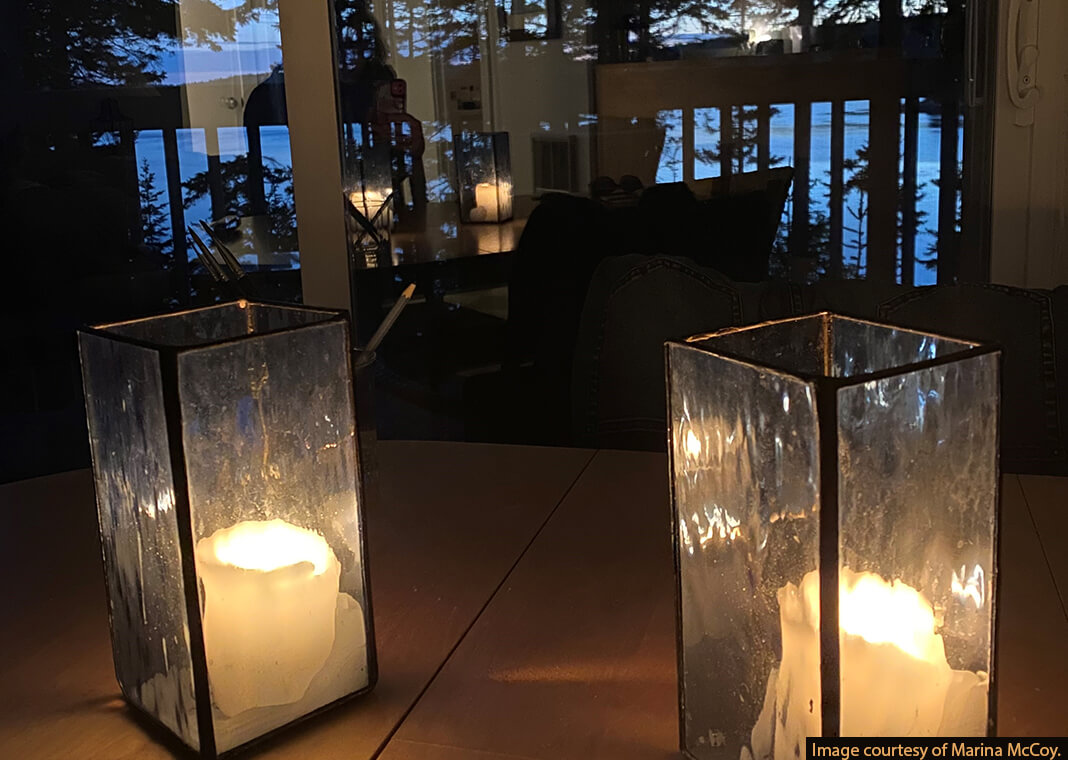
It’s Advent, and the season is full of expectation and hope. I love the regular appearances of light on the streets in the darkness. Light is consoling, and there are many other moments where we find “light”: celebrations with family, visits with friends, and happy moments of choosing a card or a gift for a family member. Yet the season has its negative moments too; the drivers seem to get particularly bad around this time of year, and the patience of others around me thinner. I have to guard against exhaustion between grading finals and preparing to visit my family across the country. Advent is not all consolation, all the time!
Ignatian spirituality encourages storing up consolation for a time of desolation. St. Ignatius understood that life has times of both consolation and desolation. We can go to prayer and find that there are movements of peace, warmth, or insight. I might vividly imagine a scriptural scene of Jesus with others, one that leads me to be closer to God. Or I might suddenly find myself experiencing a quiet moment of peace, joy, or love in the midst of everyday life and notice God is here, Emmanuel.
When one is in a state of consolation, it seems as though it will never end! I can think of many a time at the end of a retreat when I have vowed that the blessings and consolations of retreat will somehow be retained forever.
Desolation is also a part of life, however. We can all, at times, find ourselves self-centered, fearful, resentful, or distracted by superficial things. Or I might look at the world, think, What can I or God really do about that terrible situation anyway?, and start to lose hope.
Ignatius suggests that we store up consolation when we are in its midst, to return to when it is absent. There are many strategies that we might use for living this.
Some people like to journal and record special moments in prayer and go back to reread these later. When I am on retreat, I write about my experiences of God while there, not so much for my present self who already knows God without the writing, as for my future self that will go back to the real world. When I am further in time from a prayer experience, rereading an account by my former self can rekindle some of those feelings that console. At least I can act in faith and know that I was consoled, even if now I am not. I can then act on a sense of trust that God is here.
Others might find a key object or an image that stays with them. Perhaps we take a photo of a particularly beautiful moment in nature, where we felt the presence of God, and hold onto it. The sunrise might not be quite the same when we return to the photo, yet on review, we can feel some of the peace or wonder that arose with the sun that day. Or perhaps a particular line of Scripture consoles. I might decide to memorize that line so that later, I can bring it to mind when in desolation. Many of us find the infancy narratives with Jesus to be consoling because of our experiences with babies or prayer on the Bible stories.
Recollecting where we are grateful for what God has blessed us with is another way to return to consolation, in that we deliberately go back to that which connects us to God and to one another.
Returning to consolation in a time of desolation can also mean setting aside what does not console. Perhaps it is time to turn off the phone or other device, set aside some of our December “must-dos” that really don’t need to be done, set down the news story, or leave behind a busy project in order to give a little time to consolation again.
Storing up consolations also means letting ourselves rest in consolations when they come. Ignatius tells us to savor these moments in prayer. Then we can recognize that our deepest self is the one that loves and knows God and is loved and known by God. We can rest in the fact that God is here, even when we don’t yet feel Emmanuel.


Thanks Marina. Indeed consolations add spark to our life span. Storing pristine consolations for one’s onward journey has been the secret trump card of saints and sages on journey. Such consolations are known to add stamina for navigating challenges of all sorts.