


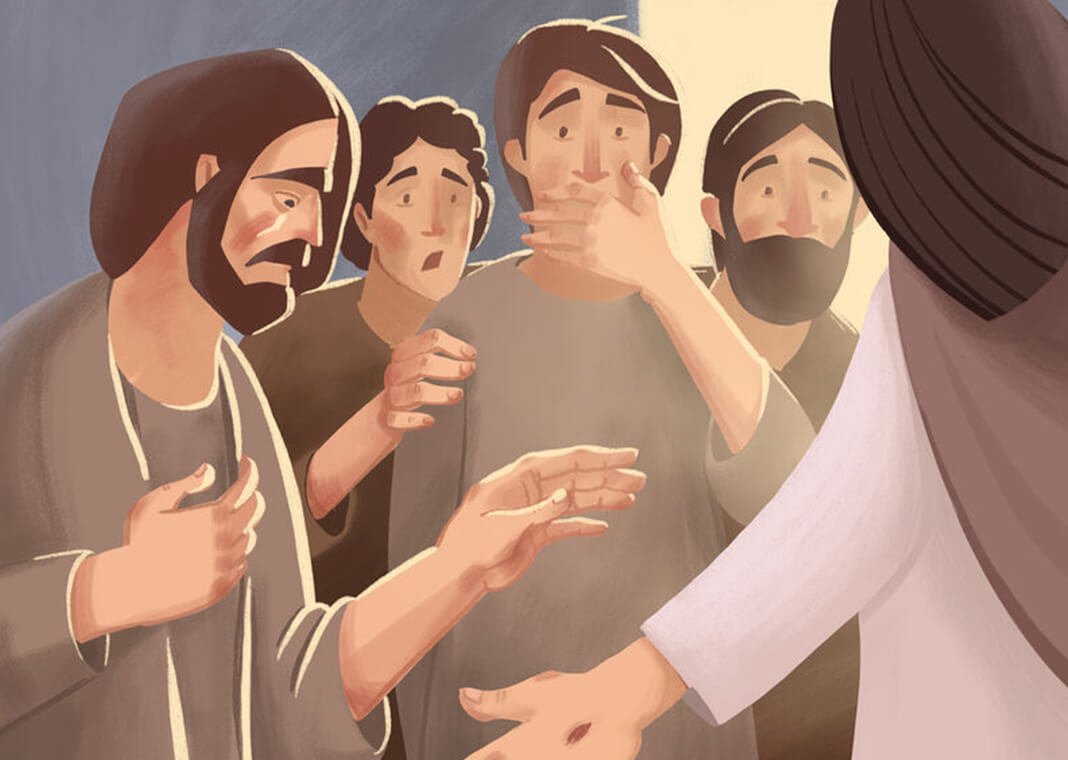
It’s mind-boggling how many times Jesus’ friends didn’t recognize him. I can’t imagine how I would not recognize one of my good friends after having lived with that person for an extended time. Even if my friend were wearing a disguise, wouldn’t there be something that might tip me off? Yet this is exactly what happened in the Gospels after the Resurrection. Obviously, Jesus must not have looked like he did before the Resurrection, but there must have been more. What is it that prevented Jesus’ friends from recognizing him?
Fear and disbelief were certainly part of the equation. Despite the fact that the disciples had witnessed Jesus’ miracles, including raising Lazarus from the dead, they could not believe the stories of Jesus appearing to fellow disciples until they saw it for themselves. And when they did see him, often they were afraid. Let’s review the pivotal moments during which the disciples recognized (knew again) that it was Jesus in their midst after the Resurrection.
- Mary Magdalene recognized Jesus when he called her by name. She seems to have almost instinctively replied upon hearing his voice, “Rabbouni! (Teacher!)” (John 20:11–18)
- The disciples who unknowingly walked with Jesus on the road to Emmaus recognized him in the blessing and breaking of the bread. (Luke 24:13–35)
- The disciples who were in the locked room when Jesus appeared knew it was him when they saw his wounds and came together at table with him. (Luke 24:36–48)
- Thomas’s senses, specifically the tactile, enabled him to know it was Jesus when Thomas touched his wounds. (John 20:19–29)
- Peter and six other disciples were fishing on the Sea of Tiberius, and the miraculous catch gave away Jesus. (John 21:1–14) The disciples had seen this happen once before, when they first met Jesus. (Luke 5:1–11)
The Gospel record of these events provides a blueprint to how it might go today. It’s likely that we wouldn’t recognize Jesus by sight, but we might hear his voice in the silence like Mary Magdalene did, or we might feel his presence when we gather in community to break bread as the disciples did. Or Jesus might come to us when we’re grieving, as he did for the disciples on the road to Emmaus. He might also arrive when, like Thomas, we are doubting him. When something in our lives goes miraculously well, like that miraculous catch of fish in the Sea of Tiberius, that would be a clear indication of Jesus’ presence too.
Another way we might recognize Jesus’ presence is through the Examen, an intentional practice of awareness. Through the Examen, St. Ignatius teaches us to glean Jesus’ presence in the moments of our lives each day. When we pray the Examen, we ask for the grace to see God’s action in our lives. We review the specific moments of our day and how we felt and what we did. Reviewing these moments can reveal the times when Jesus was present or seeking to come near. This can also reveal times when we turned away from Jesus. Like walking with Jesus and the disciples, praying the Examen daily allows us to become familiar with the Risen Christ and get in the habit of more readily recognizing his action in our lives.
A Prayer to Recognize Jesus in the Moments of Our Lives
by Rebecca Ruiz
How many times, O Lord?
How many times have I met you—and not seen you?
How many times have you spoken—and I’ve not heard you?
How many times have you worked miracles in my life—and I neglected to notice your work?
How many times have I mistaken you for a figment of my imagination—when, in fact, it was you right there all along?
I desire to see you, Jesus.
Open my ears, that I may hear your voice when you call my name.
Open my eyes, that I may see you in those I meet.
Soften my heart, that I may notice the miracles you work
And recognize you beside me in this walk of life. Amen.


Thanks Rebecca. The apostles and the disciples were simple folk. Being constantly with Jesus they grew in dignity and attained a special identity. How could they forget Him? A genuine doer of good deeds cannot be ignored or forgotten.
MUY buenos días Dra Rebeca !
Mil gracias por su reflexión del día de hoy RECONOCIENDO A JESUS HOY .
Si fué difícil para sus compañeros o discípulos , con mayor razón lo es hoy para quienes debemos apoyarnos en la FE o en la lectura del diario acontecer. Muy valiosa su ayuda y sin la menor duda potente la oración que la acompaña. Le reitero mis agradecimientos por su orientación y ayuda-
Jorge Bernardo Londoño
Hola Jorge,
¡Gracias por tu mensaje! Cultivemos ojos que vean y oídos que oigan para que podamos reconocer a Jesús entre nosotros. ¡AMDG!